Unions & Labor After World War I by kimberlychun on GoAnimate
Animated Presentations - Powered by GoAnimate.
Wednesday, February 20, 2013

Tuesday, February 19, 2013
Unions & Labor After World War I
Reading: http://goo.gl/kwCV4
Website: http://www.goanimate.com
Essential Questions:
1)Do workers have a fundamental right to form unions and strike?
-Workers did not have the fundamental right to form unions and strikes because it could interfere with the war effort. Although, after the war in 1919 people began to strike because they did not get raises and employers did not want them to join unions. Employers called striking workers communists.
2)Why did union membership plummet in the 1920's?
-Many immigrants were willing to work in poor conditions.
-Immigrants spoke in many languages so it was hard organizing them.
-Farmers who migrated to cities to find factories jobs were used to relying on themselves.
-Most unions excluded African Americans.
3)Were workers treated fairly during the 1920's?
-Workers were treated unfairly during the 1920's because they did not get the respect or pay they deserved.
4)If you were a labor union leader, would you have done anything differently?
-If i were a labor union leader i would have tried to form improving statements that would make the employers realize their horrible decisions, create better cooperating efforts, and overall increase efficiency.
Website: http://www.goanimate.com
Essential Questions:
1)Do workers have a fundamental right to form unions and strike?
-Workers did not have the fundamental right to form unions and strikes because it could interfere with the war effort. Although, after the war in 1919 people began to strike because they did not get raises and employers did not want them to join unions. Employers called striking workers communists.
2)Why did union membership plummet in the 1920's?
-Many immigrants were willing to work in poor conditions.
-Immigrants spoke in many languages so it was hard organizing them.
-Farmers who migrated to cities to find factories jobs were used to relying on themselves.
-Most unions excluded African Americans.
3)Were workers treated fairly during the 1920's?
-Workers were treated unfairly during the 1920's because they did not get the respect or pay they deserved.
4)If you were a labor union leader, would you have done anything differently?
-If i were a labor union leader i would have tried to form improving statements that would make the employers realize their horrible decisions, create better cooperating efforts, and overall increase efficiency.
Tuesday, February 12, 2013
The U.S. After WWI
Reading: http://goo.gl/TiKeX
Essential Questions:
1)Describe the feeling many Americans had after WWI.
-Many Americans felt bad after WWI because it became harder to live. The price of living doubled, they were tied and exhausted of war, and the economic situation. Women and minorities had jobs taken away or faced unemployment.
2)What were some reactions by Americans to their post-WWI feelings?
-Some reactions by Americans to their post-WWI feelings were fearful of outsiders. People become nativist or isolationist, people also feared communism because they were trying to get rid of capitalism.
3)What did the Palmer raids accomplish? Why did Palmer do the raids?
-Palmer did the raids because he wanted to hunt down political radicals (communist, socialist, and anarchists) because the capitalist system.
4)What did the KKK fear? Did their membership grow in the 1920's
-The KKK feared anyone who was not Americanism. The membership grow in 1920's because people were fearful and scared of change and therefore, joined the KKK.
1)What was the quota system? (i.e. The quota system was a law that...)
-The quota system was a law that established the maximum number of people who could enter the United States from each foreign country.
2)Was the quota system discriminatory? If yes, to whom?
-The quota system discriminated against people from Eastern and Southern Europe. Mostly, Catholics and Jews.
3)How was Mexico affected by the quota system?
-Mexico was affected by the quota system because the law did not apply to immigrants from the Western Hemisphere. Almost 500,000 Mexicans crossed the nation's borders.
4)How was Japan affected by the quota system?
-Japan was affected by the quota system because the law prohibited Japanese immigration. Which caused bad feeling between the two nations.
Essential Questions:
1)Describe the feeling many Americans had after WWI.
-Many Americans felt bad after WWI because it became harder to live. The price of living doubled, they were tied and exhausted of war, and the economic situation. Women and minorities had jobs taken away or faced unemployment.
2)What were some reactions by Americans to their post-WWI feelings?
-Some reactions by Americans to their post-WWI feelings were fearful of outsiders. People become nativist or isolationist, people also feared communism because they were trying to get rid of capitalism.
3)What did the Palmer raids accomplish? Why did Palmer do the raids?
-Palmer did the raids because he wanted to hunt down political radicals (communist, socialist, and anarchists) because the capitalist system.
4)What did the KKK fear? Did their membership grow in the 1920's
-The KKK feared anyone who was not Americanism. The membership grow in 1920's because people were fearful and scared of change and therefore, joined the KKK.
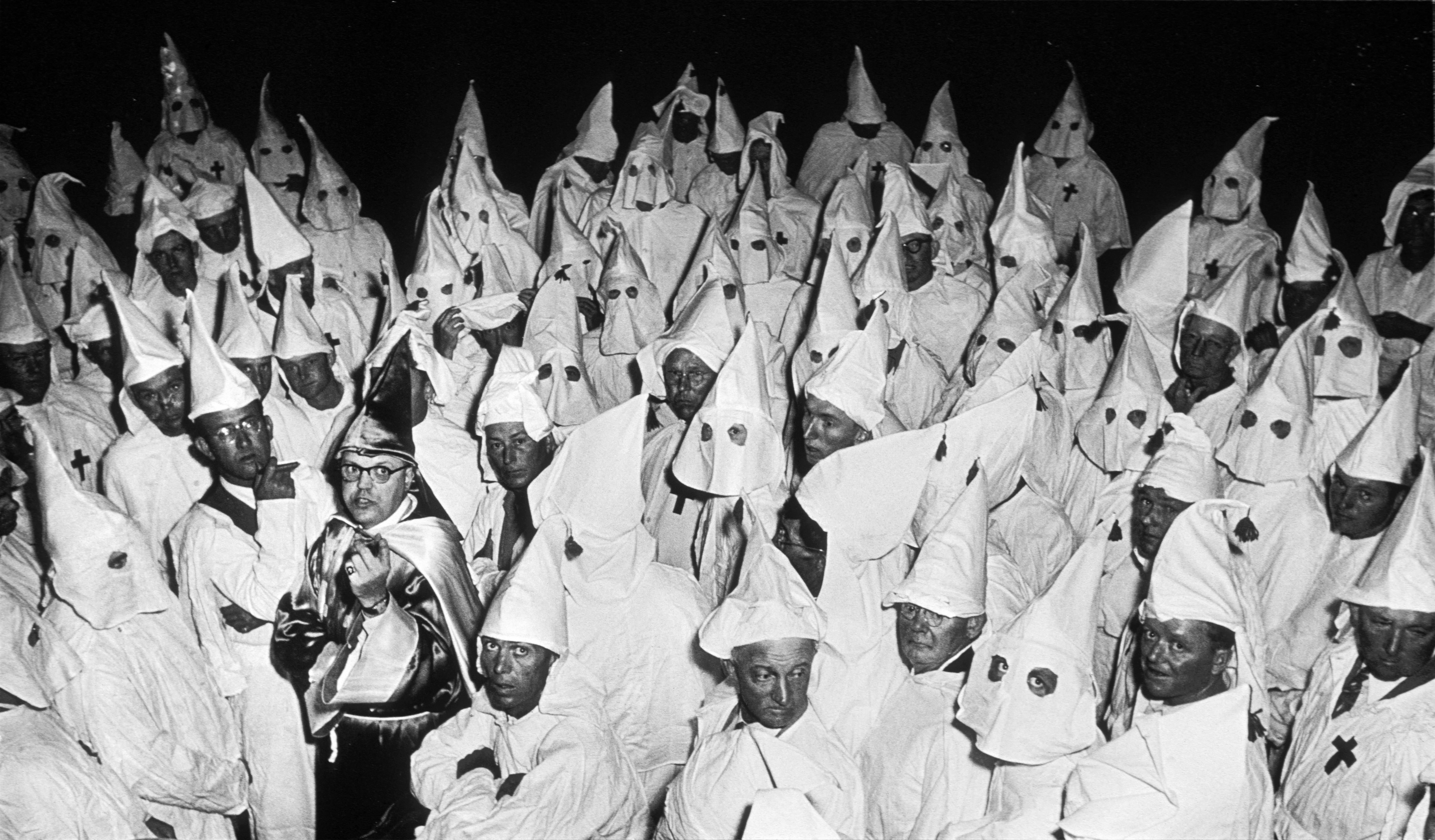 |
Ku Klux Klan [KKK]. (http://icplibrary.files.wordpress.com/2012/06/wes_003.jpg) |
1)What was the quota system? (i.e. The quota system was a law that...)
-The quota system was a law that established the maximum number of people who could enter the United States from each foreign country.
2)Was the quota system discriminatory? If yes, to whom?
-The quota system discriminated against people from Eastern and Southern Europe. Mostly, Catholics and Jews.
3)How was Mexico affected by the quota system?
-Mexico was affected by the quota system because the law did not apply to immigrants from the Western Hemisphere. Almost 500,000 Mexicans crossed the nation's borders.
4)How was Japan affected by the quota system?
-Japan was affected by the quota system because the law prohibited Japanese immigration. Which caused bad feeling between the two nations.
Monday, February 11, 2013
Progressive Exam Reflection
Essential Questions:
Test Corrections/Missed Questions:
1)Southern states sometimes used a grandfather clause to allow them to
Correct Answer: (C)Keep African Americans from voting while allowing whites to do so.
My Answer: (D)Deny voting rights to African Americans who passed the literacy test.
-I missed question one because the question was confusing for me because there was two good answers but answer (D) was more correct than answer (C).
2)Cities in the late 19th century expanded with the development of all the following except
Correct Answer: (C)Airplanes.
My Answer: (D)Suspension bridges.
-I missed question two because i did not carefully read though the answers and was thinking about a different time period.
21)The last states to grant women full suffrage before 1920 were
Correct Answer: (B)Oklahoma, South Dakota, and Michigan.
My Answer: (A) New York, Michigan, and South Dakota.
-I missed question 21 because i was too quick to answer and did not double check to ensure that my answer was the correct answer.
*I learned as a test taker i improve if I'm under less stress and am more relaxed. I could improve by carefully reading the questions. Overall, i believe i did a good job because i tried my best and had confidence.
Score: 20/23
Test Corrections/Missed Questions:
1)Southern states sometimes used a grandfather clause to allow them to
Correct Answer: (C)Keep African Americans from voting while allowing whites to do so.
My Answer: (D)Deny voting rights to African Americans who passed the literacy test.
-I missed question one because the question was confusing for me because there was two good answers but answer (D) was more correct than answer (C).
2)Cities in the late 19th century expanded with the development of all the following except
Correct Answer: (C)Airplanes.
My Answer: (D)Suspension bridges.
-I missed question two because i did not carefully read though the answers and was thinking about a different time period.
21)The last states to grant women full suffrage before 1920 were
Correct Answer: (B)Oklahoma, South Dakota, and Michigan.
My Answer: (A) New York, Michigan, and South Dakota.
-I missed question 21 because i was too quick to answer and did not double check to ensure that my answer was the correct answer.
*I learned as a test taker i improve if I'm under less stress and am more relaxed. I could improve by carefully reading the questions. Overall, i believe i did a good job because i tried my best and had confidence.
Score: 20/23
Tuesday, February 5, 2013
Treatment of Peoples of Color
Essential Questions: (Page 288-289)
1)How did Mexicans earn a living in the late 1800's, and where did they do this work?
-Mexicans were hired to work on railroads more than members of any other ethic group to construct rail lines in the Southwest with the least amount of pay. Mexican workers became the major force in the agricultural industries of the region.
2)Describe African-American life in the 1900's (where did they move to, what was their experience, etc)?
-Most African Americans lived in the segregated South, but, a great amount moved to Northern cities because of better paying jobs and social equality. Although, it has discrimination, segregated neighborhoods, unequal workplace, and they often discouraged black memberships/employes.
1)How did Mexicans earn a living in the late 1800's, and where did they do this work?
-Mexicans were hired to work on railroads more than members of any other ethic group to construct rail lines in the Southwest with the least amount of pay. Mexican workers became the major force in the agricultural industries of the region.
2)Describe African-American life in the 1900's (where did they move to, what was their experience, etc)?
-Most African Americans lived in the segregated South, but, a great amount moved to Northern cities because of better paying jobs and social equality. Although, it has discrimination, segregated neighborhoods, unequal workplace, and they often discouraged black memberships/employes.
 | |
| Railroad Tracks. (http://globalcitizenblog.com/wp-content/uploads/globalcitizen/railroad_tracks414.jpg) |

Monday, February 4, 2013
Recreation in the U.S.
Essential Questions: (Page 292-293)
1)When and why did Americans begin to recreate?
-Americans began to recreate in the late 1800's. Americans recreated to have fun because before all they did was work for a straight 16 hours with no enjoyment in their life.
2)Were the reasons Americans began to recreate the same or different compared to Americans today?
-The reasons Americans began to recreate is still the same compared to Americans today. Americans still recreate to have fun.
1)When and why did Americans begin to recreate?
-Americans began to recreate in the late 1800's. Americans recreated to have fun because before all they did was work for a straight 16 hours with no enjoyment in their life.
2)Were the reasons Americans began to recreate the same or different compared to Americans today?
-The reasons Americans began to recreate is still the same compared to Americans today. Americans still recreate to have fun.
 | ||
| Tennis. (http://ayabatennisclub.files.wordpress.com/2011/04/tennis-4.gif) |
 |
| Bike. (http://2013-bike-images.s3.amazonaws.com/bicycles/MARIN-2013-SAN_RAFAEL_DS3.jpg) |
Friday, February 1, 2013
Teddy Roosevelt's Presidency
 |
| 26th President Theodore (Teddy) Roosevelt, term: 1901-1909. (http://www.whitehouse.gov/sites/default/files/first-family/masthead_image/26tr_header_sm.jpg?1250880789) |
 |
| "It's hard to fail, but it is worse to never to have tried to succeed." (http://livebyquotes.com/2013/it-is-hard-to-fail-but-it-is-worse-never-to-have-tried-to-succeed-theodore-roosevelt-2/) |
Teddy Roosevelt (T.R.) Essential Questions:
1. Describe T.R.'s life before he became president (where he was from, date he was born, something interesting about his life).
-T.R was born on October 27, 1858 and died on January 6, 1919. T.R. was born on 28th East 20th Street, New York city. Child of Theodore and Martha Roosevelt. T.R attended Harvard University.
2. How did he become president?
-T.R was the 26th U.S. president. His term was September 14, 1901 though March 4, 1909. He became president because William McKinley was shot and died in 1901.
3.What was T.R.'s "Bully Pulpit?"
-T.R's Bull Pulpit was a terrific platform from which to advocate an agenda. (Ex/ White House.)
4. Summarize T.R.'s opinion on civil rights?
-T.R's opinion on civil rights was that the wanted separate but equal.
5. Explain if you would like T.R. if he were president today?
-I think i would not have liked T.R to be president today because separation would not be ideal for this time period.
Subscribe to:
Posts (Atom)